Principal Realities
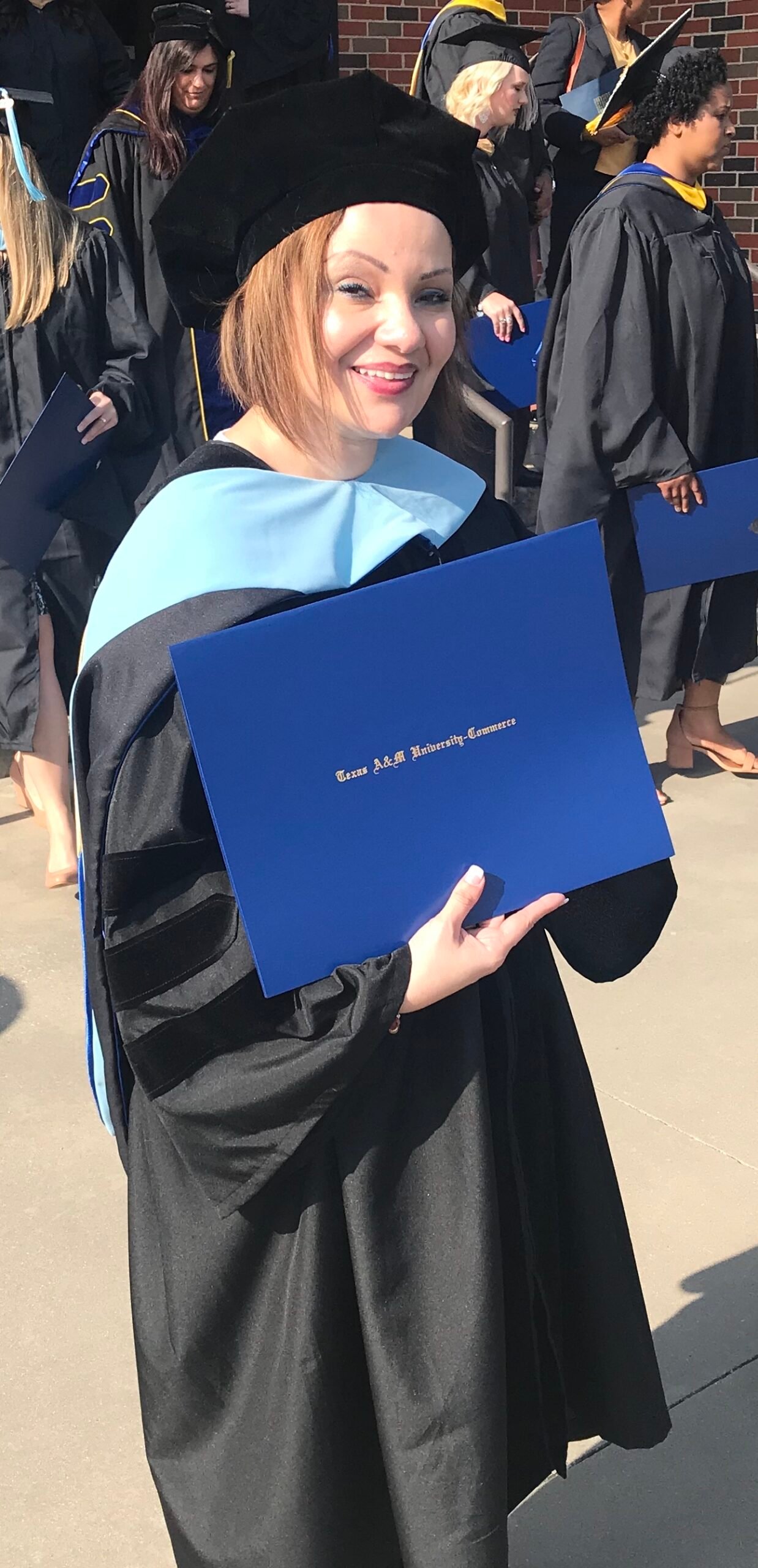
Dr. Tania
S. Loyola
EdD · Educational Leadership · Coach · Mentor
The mentor and guide I never had — so you don’t have to go through it alone.
I have sat in every seat. Classroom teacher. Bilingual educator. Lead teacher. Assistant Principal at the elementary, middle, and high school levels. Principal of an elementary school. Principal of a high school.
Nearly 20 years in K–12. Every level. Every kind of hard decision. Every moment where the weight of the role sat entirely on my shoulders with no one behind me to catch it.
I walked away on my own terms, with my integrity intact. Now I do the work nobody did for me.

education
educators
across all levels
no one goes it alone
The truth about leadership
Nobody warns you about the loneliness.
The top makes decisions. The bottom sees you as the enemy. And you — right there in the middle — are expected to lead with confidence, absorb the tension from both sides, and never let them see you flinch.
I navigated all of it without a roadmap. As a bilingual educator I carried double the workload in spaces that saw my language as either an asset to exploit or a liability to manage — rarely as the gift it actually was.
I figured it out the hard way, so I know exactly where the hard parts are. That’s what I bring into every conversation I have with the educators I work with.
Beyond K–12
The classroom changed.
The mission didn’t.
After leaving the principalship I took my experience into higher education — teaching at the university level and the community college level, continuing to develop the next generation of educators and leaders.
The coaching I do now started 20 years ago when I was a lead teacher pulling new educators aside and telling them what nobody had told me. That impulse never left. It just grew.
Helping others succeed isn’t something I added to my career. It has always been the point of it.
“I would be genuinely selfish if I stayed silent now. I didn’t have this help. Every person coming up behind me deserves better than that.”
— Dr. Tania S. Loyola
Real Results
These are real.
The names aren’t.
Every principal in these stories gave permission to share what happened — without their name, their district, or any detail that would identify them. Because that’s the reality of this work. The stigma is real. The struggle is real. And so are the results.
“She had her resignation letter drafted. Not as a threat — as a plan.”
She came to me in October of her fourth year. She had a timeline, a savings runway, and a version of the story she was going to tell her superintendent that was professional enough to protect her next move. She was done. And she had very good reasons to be done.
Her superintendent had been undermining her publicly for two years. A toxic staff member she had inherited was still in her building, still poisoning her third-grade team, still protected by a principal before her who had documented nothing. She was exhausted in a way that sleep wasn’t fixing.
She reached out because she wanted someone to tell her she wasn’t crazy for leaving. I told her I couldn’t make that decision for her — but I could help her figure out whether she was leaving because it was right or because she was depleted. Those are different decisions.
We spent twelve weeks working through it. She had the conversation with her superintendent she had been avoiding for two years — documented, direct, and on her terms. She moved on the staff member. Not perfectly. Not without conflict. But she moved.
She didn’t resign. She transferred to a school that had been recruiting her quietly for a year. She told me she didn’t stay in education because of me. She stayed because she finally had enough clarity to remember why she started — and enough strategy to stop surviving and start leading. She called it the best year of her career.
“He was interviewing like an AP. Search committees were listening for a principal.”
He had been an assistant principal for six years across two schools. He was good — everyone said so. He had applied for principal positions three times and had not made it past the first interview once. He came to me convinced the system was rigged against him. He wasn’t entirely wrong.
But when we started working together, something else became clear. He was talking about what he managed, what he oversaw, what he maintained. He was giving search committees an operations report when they were listening for vision. He answered every question with competence when they were looking for leadership.
He didn’t need more experience. He needed to understand the difference between being number two and presenting himself as the one. We spent four weeks rebuilding how he talked about his work — not what he did, but what he saw, what he believed, and what he would build.
He interviewed twice after our work together. He got the second position. Elementary school, 480 students, a district that had been looking for someone like him for two years. His entry plan was the strongest I have ever seen a first-year principal walk in with.
“She called me on a Sunday night in November. She was crying in her car in her driveway.”
She had been a principal for eleven weeks. She could not make herself go inside and pretend to her family that everything was fine. A staff member was filing a formal grievance against a decision she had made in week three. A parent group was organizing against her. Her superintendent was “supportive” in public and unavailable when she actually needed guidance.
She was not failing. She was learning the hardest parts of the job in the most compressed way possible, without anyone to tell her that what she was experiencing was survivable.
We spent eight weeks working through it — the grievance, the parent situation, the superintendent dynamic, and the leadership decisions she needed to make differently going forward. By February her building was calmer. Not perfect — calm. She repaired the parent relationship. The grievance resolved. One honest conversation with her superintendent changed the nature of that relationship permanently.
She told me recently that November night in the driveway was the moment she almost became a statistic — another first-year principal who didn’t make it through. Instead it became the moment she decided to stop figuring it out alone.
“Twenty-two years in education. Fourteen as a principal. He came to me emptied out.”
He had outlasted five superintendents, two district restructurings, a pandemic, and more school improvement plans than he could count. He didn’t come to me burned out in the dramatic sense. He came emptied out — the quiet kind of done where you’re still showing up, still professional, but the thing that used to drive you is just gone.
He described it as going through the motions in a role he used to love. He wasn’t in crisis. He was coasting. And he knew his staff could feel it even when they couldn’t name it. He wanted to figure out whether he had anything left — or whether it was time to finish with integrity before he became the principal who stayed too long.
We spent twelve weeks on the most honest conversation about educational leadership I have had with anyone. Not strategy — the real questions. Why he started. What he had actually built. What it would mean to leave, and what it would mean to stay with intention.
He didn’t retire. Something fundamentally shifted. He restructured his role, reinvested in the work that originally lit him up, and had a real conversation with his superintendent about what his final chapter of leadership was going to look like. He told me the last year has been the most intentional of his career. He knows why he’s there. He knows what he’s building. He knows when he’s done. That’s not nothing. That’s everything.
“She wasn’t waiting to be ready. She was waiting for permission.”
She had been saying she wanted to be a principal for four years. She had started her admin credential twice and stopped both times. She was the teacher every principal leaned on — running data meetings, covering discipline, mentoring every new teacher in the building. She was doing the job without the title.
And she was terrified. Not of the work — she was already doing the work. Terrified of being seen. Terrified of applying and not getting it. Terrified that if she named what she wanted and went for it, she might find out she wasn’t enough.
She came to me not for interview prep. She came because she needed someone to tell her the truth about whether she was ready. I didn’t tell her she was ready. I showed her the evidence that she already was — and then I asked her what she was going to do about it.
We spent four weeks building her portfolio, sharpening her story, and preparing her to walk into a room and tell a search committee exactly who she was and what she would build. She applied for two positions. She got the first one. Assistant principal, middle school, a district she had been watching for two years.
At our last session she said something I think about often: “I wasn’t waiting to be ready. I was waiting for permission. You just refused to give it to me — and that was exactly right.”
Ready to write your own story?
Apply for Coaching →1-on-1 Coaching
This is not a program.
It’s direct access.
When you work with me one-on-one, you get 20 years of lived experience — not a framework I learned from someone else. You get someone who has occupied every chair you’re sitting in and can tell you exactly what it costs, and exactly what gets you through it.
I do not take on many clients. That is intentional. Full presence is not something I can give in volume, and I refuse to offer you anything less than that. My time is my most valuable asset — and I treat yours the same way.
My coaching reflects what I believe: that the right guidance, at the right moment, from someone who has actually been there — changes everything. The investment reflects that.
Limited availability · 3 to 4 clients at a time
What to expect
I protect my time so I can show up fully for every client. That balance is not a luxury. It’s a choice I model every day.
The life I live
Balance is not a talking point for me. It is what my mornings look like — and I built my work around protecting it.
My mornings start slowly — making breakfast for my grandchildren, drinking my coffee, letting the day begin on my terms. That is not an accident. That is the result of every hard decision I made about what I was and wasn’t willing to sacrifice.
I tell every leader I work with: the career is not the whole story. You are allowed to build something that includes a life you actually love. I did. And I work with a small number of clients precisely because I refuse to let my work consume what I’ve built.
I live what I teach. That is the only way I know how to do this.
You do now.